Delhi Agra Jaipur Tour by Luxury Car and Private Driver
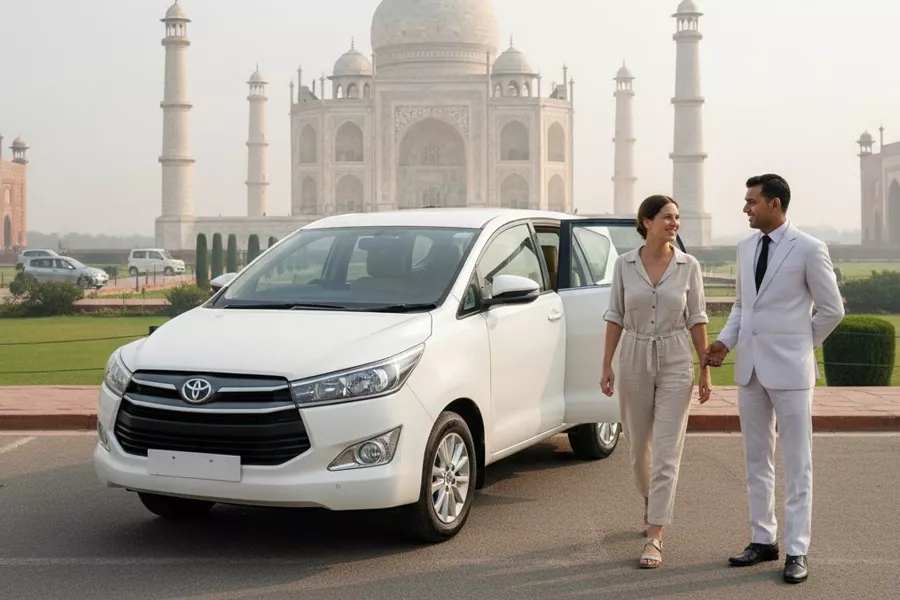
Look, hiring luxury car with private driver changes everything for Golden Triangle. Everything. Instead of stressing about logistics, negotiating with random taxi guys at every stop, or missing photo opportunities because you’re stuck figuring out which exit leads to Taj Mahal parking, you just sit back in climate-controlled sedan or SUV while your driver handles literally every single detail that usually makes travel exhausting.
Routes. Parking headaches. Timing between cities. Local knowledge about which gate at Amber Fort has shorter lines.
You know what I always say – Golden Triangle without good driver is just three cities you rushed through, with driver it becomes proper experience you actually remember fondly.
American couple last month tried doing Delhi-Agra-Jaipur on their own using app cabs, gave up by Agra and hired private driver for rest of trip, told me honestly they should’ve started with driver from day one. French family booked luxury Innova Crysta with experienced driver, smooth four-day circuit without stress, driver even suggested best sunset spot at Nahargarh Fort they wouldn’t have found otherwise. Canadian tourists at Jaipur said their driver became friend by end of trip, took them to local chai place, made entire Golden Triangle feel personal instead of touristy checklist everyone does.
Ever wonder what separates good Golden Triangle experience from mediocre rushed one everyone complains about? Or how to book driver you can actually trust before you land in Delhi hoping for best?
This guide explains everything for booking confidently. What to look for. What to avoid. How to travel comfortably through India’s famous circuit without transit confusion ruining days. I think getting this part right makes difference between trip you enjoy and trip you just survive, honestly.
The Delhi-Agra-Jaipur route remains India’s most popular tourist circuit for good reason: it connects three architecturally and culturally distinct cities that together represent North India’s imperial heritage. Yet the route also presents practical challenges—heavy metropolitan traffic in Delhi and Jaipur, congested highways during tourist season, confusing local taxi negotiations, and the exhaustion of managing multiple transportation changes across three days or more.
A dedicated driver eliminates these stressors entirely. Your vehicle becomes your mobile base—secure luggage storage, reliable air-conditioning, your own schedule, spontaneous photo stops, and consistent comfort across 900+ kilometres of road travel. For first-time India visitors especially, the psychological security of having one trusted professional handle transportation while you observe the landscape, make mental notes, and actually rest during driving time represents extraordinary value.
Beyond logistics, private drivers on popular tourist circuits accumulate practical knowledge that guidebooks miss: the least-congested traffic routes at specific times, which monuments reward early-morning visits versus late afternoon, where to stop for authentic chai without tourist markup, and how to navigate cultural etiquette at religious sites. This accumulated wisdom, shared conversationally during drives, transforms a journey into genuine cultural education rather than hurried sightseeing.
Season dramatically affects both your comfort level and pricing. The Golden Triangle experiences temperature extremes that directly impact outdoor sightseeing enjoyment.
Winter (October–March): The clear choice for most travellers. Temperatures range 8–25°C (46–77°F) depending on specific month and time of day. October-November offers pleasant 15–28°C days with clear skies and manageable crowds. December-January brings cool 8–20°C temperatures (requiring light jacket layers) but guarantees excellent visibility for photographs and monument exploration. February-March return to comfortable 18–32°C conditions with continued clarity. This entire 6-month window represents peak tourist season, resulting in 80-90% hotel occupancy in November-January and full availability of guides and services.
Summer (April–June): Temperatures exceed 35°C (95°F) regularly, reaching 40–45°C (104–113°F) in May-June. Outdoor sightseeing becomes physically uncomfortable; monument visits require very early starts (6-7am) and late afternoon returns (after 4pm) with midday confinement to air-conditioned spaces. Hotels offer significant discounts (20-40% off winter rates), appealing to budget-conscious travellers with heat tolerance. Highway driving remains feasible due to vehicle air-conditioning, though fuel costs increase due to heavier AC usage. Crowds drop significantly—you may be nearly alone at Taj Mahal during May afternoon visits. Suitable for: extremely budget-conscious travellers, those with high heat tolerance, photographers seeking minimal-crowd conditions.
Monsoon (July–September): Rainfall transforms the landscape to vivid green; temperatures moderate to 25–35°C (77–95°F). Roads remain navigable despite showers; highways don’t typically close. Cloud cover reduces harsh sun exposure, making afternoon sightseeing more tolerable. Hotels offer 30-50% discounts. Tourist numbers drop to lows. The primary disadvantage: unpredictable rain can disrupt outdoor plans, though major sightseeing at monuments remains possible. Humidity increases significantly. Best for: nature photographers, environmentally-conscious travellers seeking green landscapes, those seeking solitude at major sites, budget-conscious groups willing to adapt plans around showers.
Shoulder season strategy: October and March offer optimal value—pleasant weather, moderate crowds, and better pricing than December-January peak. February also works excellently. These three months balance comfort, availability, and cost more effectively than strict peak-season travel.
Private car hire isn’t the only way to experience the Golden Triangle—it’s simply one approach with distinct advantages and trade-offs.
When private car hire is genuinely superior: First-time India visitors nervous about independent navigation; families with children (safety, comfort priority); groups of 4+ (cost-effective on per-person basis); limited time requiring optimization of sightseeing efficiency; preferences for flexible daily timing; desire to avoid crowded buses or trains; anyone valuing privacy and security over budget minimization.
When alternatives might work equally well: Budget-conscious solo backpackers (trains/buses cheaper per-person); extensive India experience and comfort with independent local transport; interest in meeting other travellers (group tours, hostels); extended timeframe (lower daily-cost priority). Group organized tours (₹15,000–₹25,000 per person) sometimes work for simplicity if you accept fixed itineraries and group pace.
The honest reality: Private car hire with driver represents premium-budget travel—not ultra-luxury, not shoestring, but the optimal balance point between comfort, control, and reasonable cost for most standard tourists. The experience quality and flexibility justify the cost relative to alternatives.
Just fill in the form here with all necessary details and we will provide you the perfect, tailor-made itinerary at the best possible price, one of our travel experts will contact you shortly.
© 2026 Divine Private Tours. All rights reserved.
© 2026 Divine Private Tours. All rights reserved.